James Baldwin in Paris
James Baldwin left Harlem for Paris in November 1948 with forty dollars. Café Tournon, at 18 Rue de Tournon, became the table where the Black writers of the Left Bank met, argued and drank. It is the address on our first fragrance.
A page from Postcard for the 61st Venice Biennale, with Michael Raeburn’s essay and Baldwin’s own notes.
I
Café Tournon, 18 Rue de Tournon
Baldwin wrote Go Tell It on the Mountain and Giovanni’s Room in France. Giovanni’s Room, published in 1956, was his first book outside the subject of race, and the one that earned him the Légion d’Honneur in 1986.
Michael Raeburn, the Zimbabwean writer and filmmaker, met him at a London book launch in 1974 and became his friend and, for a time, his lover. “Being from Africa, for me his head and face were like a Benin mask come alive,” Raeburn writes in the book.
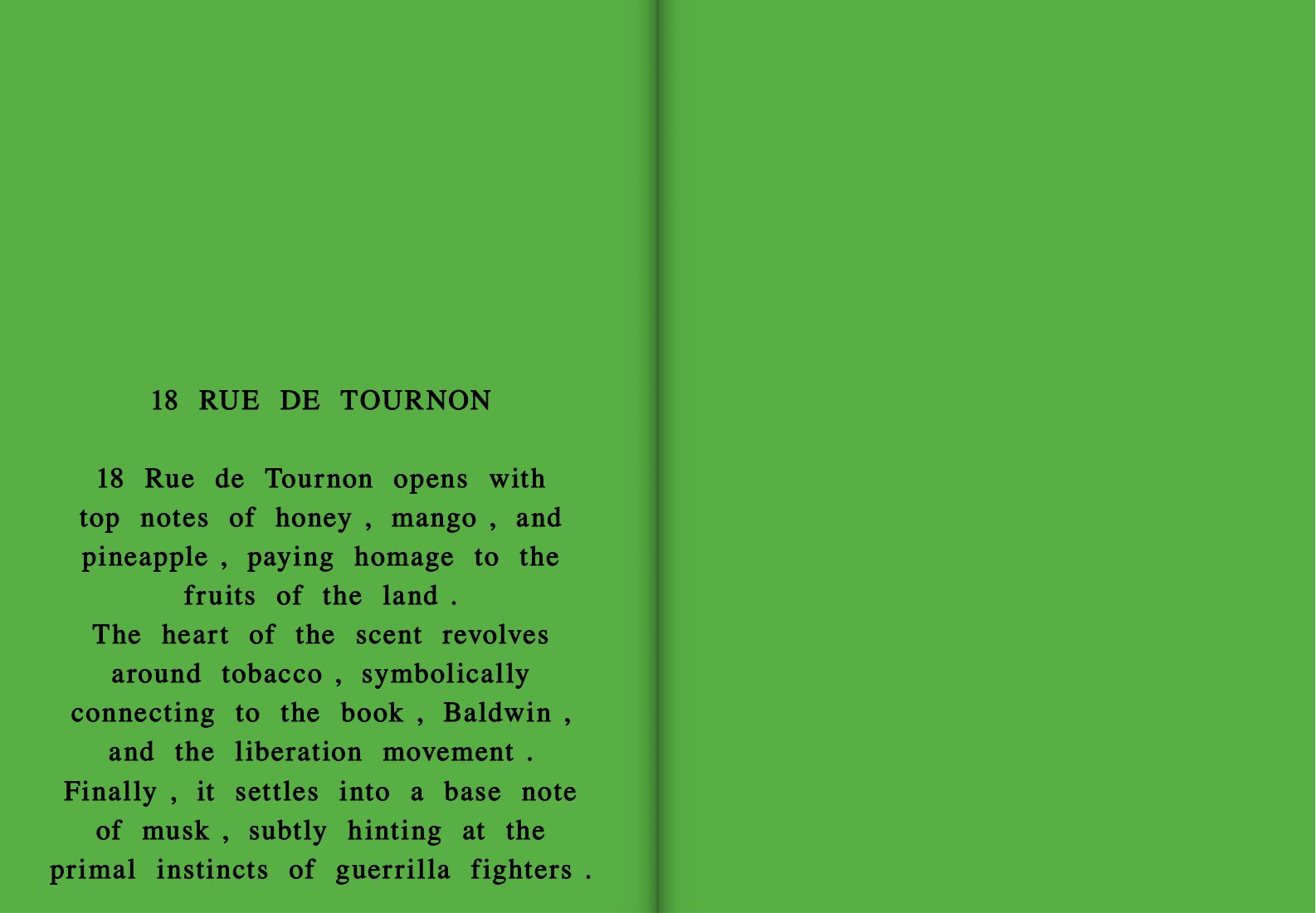
The street gives the fragrance its name: honey, mango and pineapple over tobacco, patchouli and sandalwood, on amber, musk and vanilla.
The book, open at Rue de Tournon.
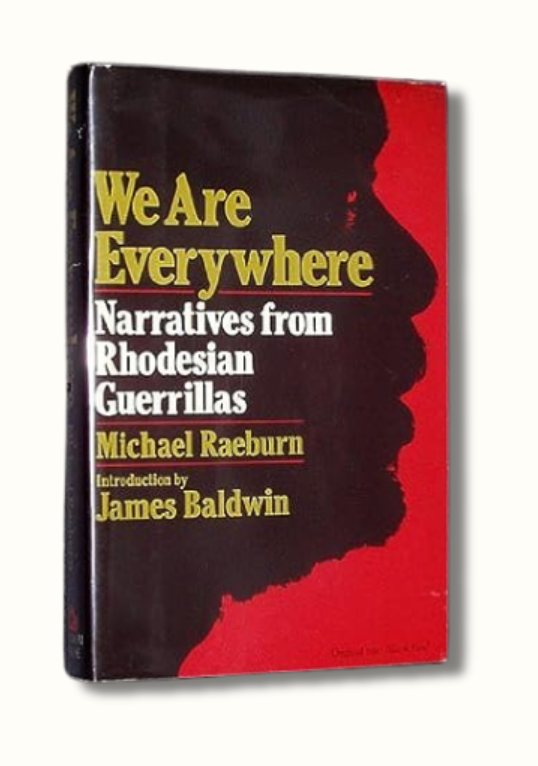
The American edition, 1978.
II
Black Fire!, 1978
Raeburn’s book on the guerrilla war in his home country was published in London and New York in 1978 with an introduction by Baldwin, who told an agent it was a fine book before he had read a word of it. Toni Morrison, then an editor at Random House, brought it to America as We Are Everywhere.
The launch was at the Africa Centre, London, in January 1978. Baldwin’s introduction is the text 1925 Glen Norah began with. One copy of the first edition is in the cabinet.
III
Giovanni’s Room, the screenplay
On his 53rd birthday, 2 August 1977, in the garden of his house at Saint-Paul de Vence, Baldwin announced that he and Raeburn would write a screenplay of Giovanni’s Room. “We can also love one another in other ways,” he had said. “We’ll write the script together.”
They worked through 1978, with Marlon Brando and Robert De Niro in mind for Guillaume and Giovanni. Baldwin’s agent in New York wanted $100,000 for an option. Neither of them had it, and producers of the late 1970s turned away from a love story between two men. The bound proposal still ends with “to be continued!” in Raeburn’s hand.
Raeburn tells the whole story in the book, reprinted from the James Baldwin Review.
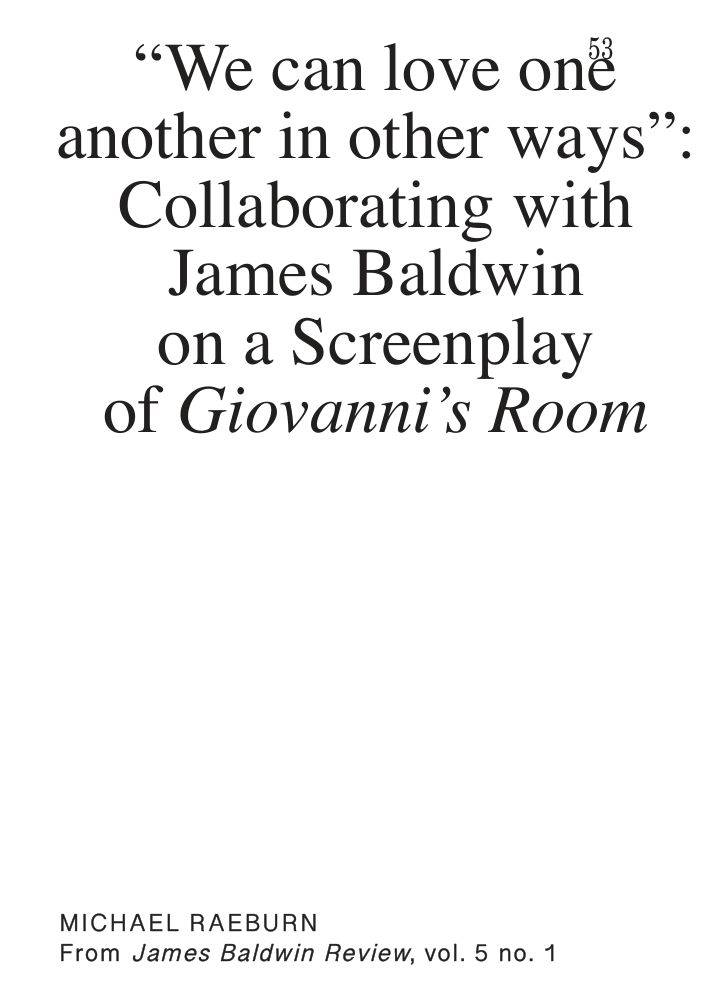
The essay’s opening page.
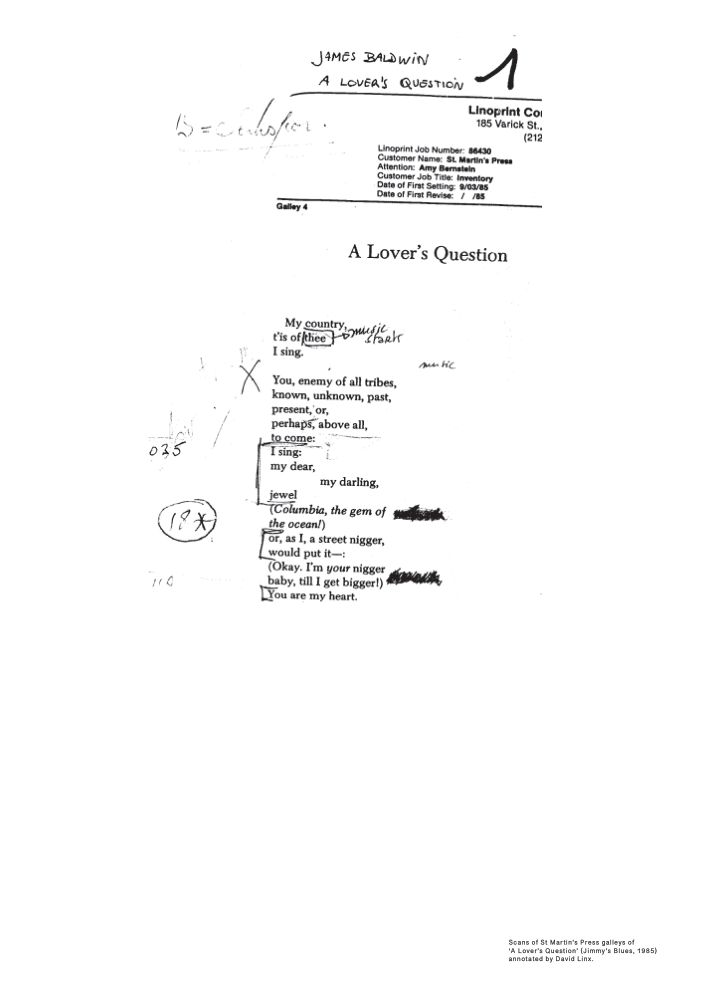
Baldwin’s notes, from the book.
IV
A Lover’s Question
In 1990 the Belgian singer David Linx recorded Baldwin reading his poems over music. The book publishes Baldwin’s working notes for A Lover’s Question for the first time, with the St Martin’s Press galleys, and the programme from an evening in celebration of Baldwin at Church of Sound, London, in August 2024.
V
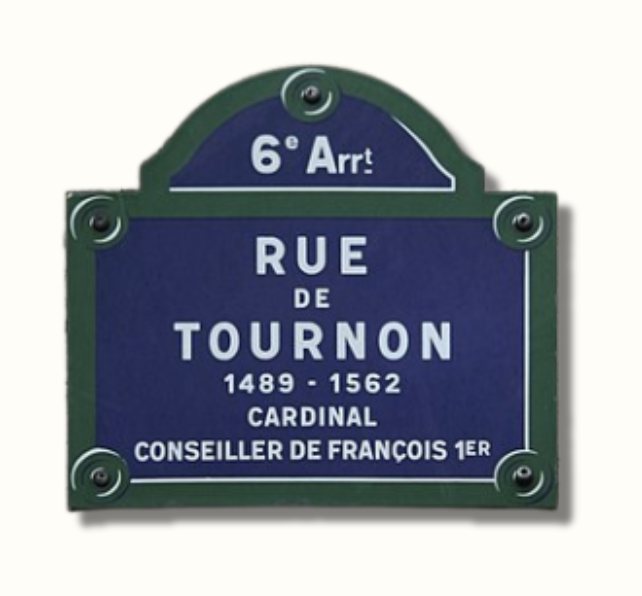
In the cabinet
Books from the same Paris, one copy of each: Just Above My Head, Baldwin’s last novel, in paperback. Exiled in Paris by James Campbell, on Wright, Baldwin and Beckett on the Left Bank. Paris Without Regret by Ursula Broschke Davis, on Baldwin, Kenny Clarke, Chester Himes and Donald Byrd. And a Rue de Tournon street sign.